

Another useless project
hAIku-Matic Generator
hAIku-Matic writes original 5-7-5 haiku using a tiny AI language model of just under 30 million parameters. Human-made rules and training determine the character and sensibility. The AI builds the sentences in the traditional 5-7-5 form. Winter, Spring, Summer, Autumn and the Cosmos are the inspiration.
In your browser
The web generator runs the model in your browser with WebAssembly, so every poem is written on your own computer or phone, not on a server. Watch poems rise in a star-field crawl or scroll them in a reading view, choose a theme and a style (Free, One-thing, Two-part or Mixed), and turn on shakuhachi music. A copied link keeps the theme and style.
On the hardware
The same model runs on an ESP32-S3 board in a 3D-printed case, with no internet connection at all. Tap the touchscreen for a new poem, step through the themes, choose a style and a poem color, and pick a looping track from the microSD card to play while it writes.
The hardware
A Robot Poet for Your Pocket
ESP32-S3, firmware V8.32
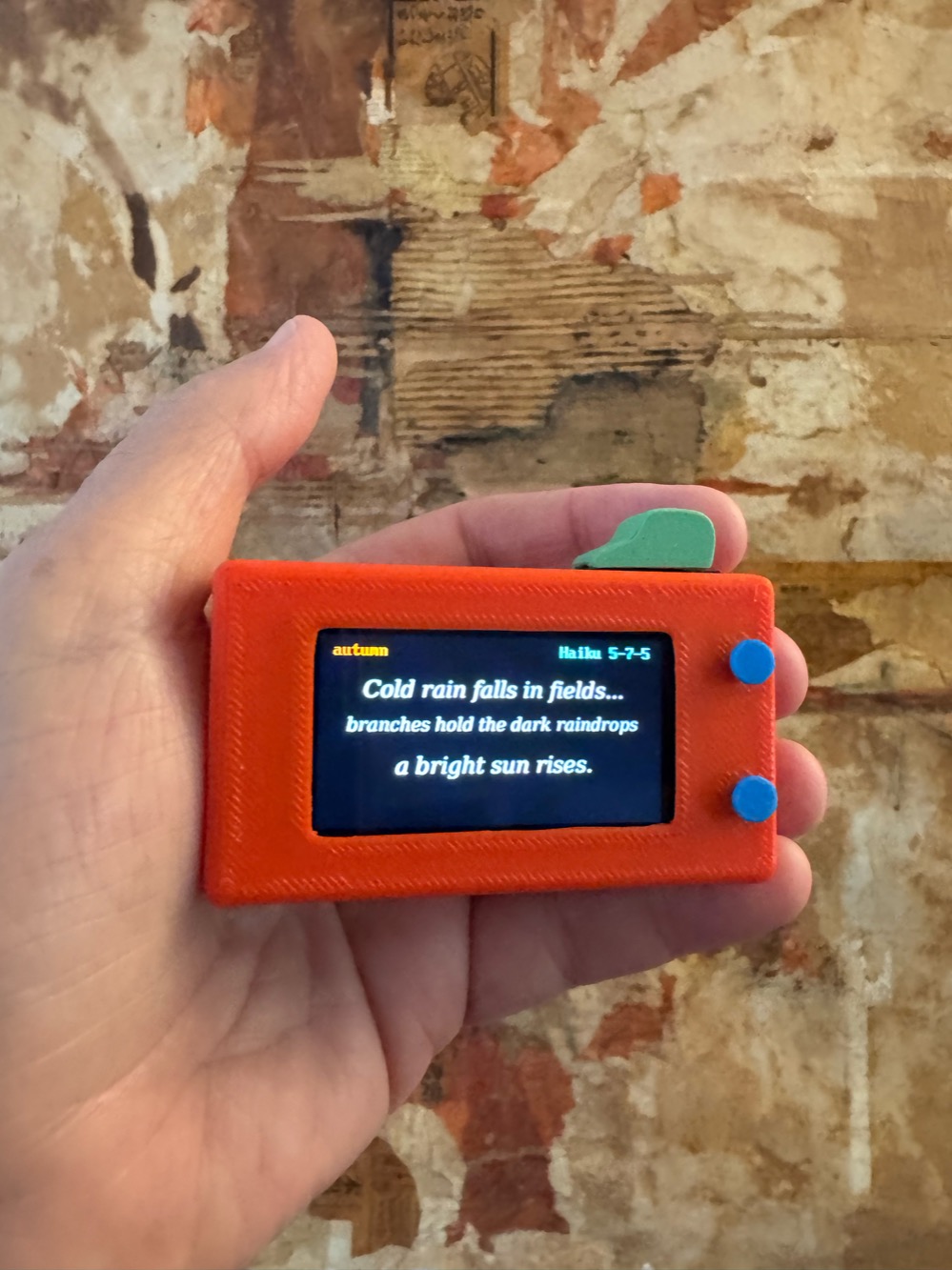
hAIku-Matic runs its own local AI small language model, under 30 million parameters, directly on the device, and needs no network or internet connection. It can write over one billion unique haiku, plays cool Japanese music to put you in the mood, and supports three styles of haiku: Standard, One-thing and Two-part.
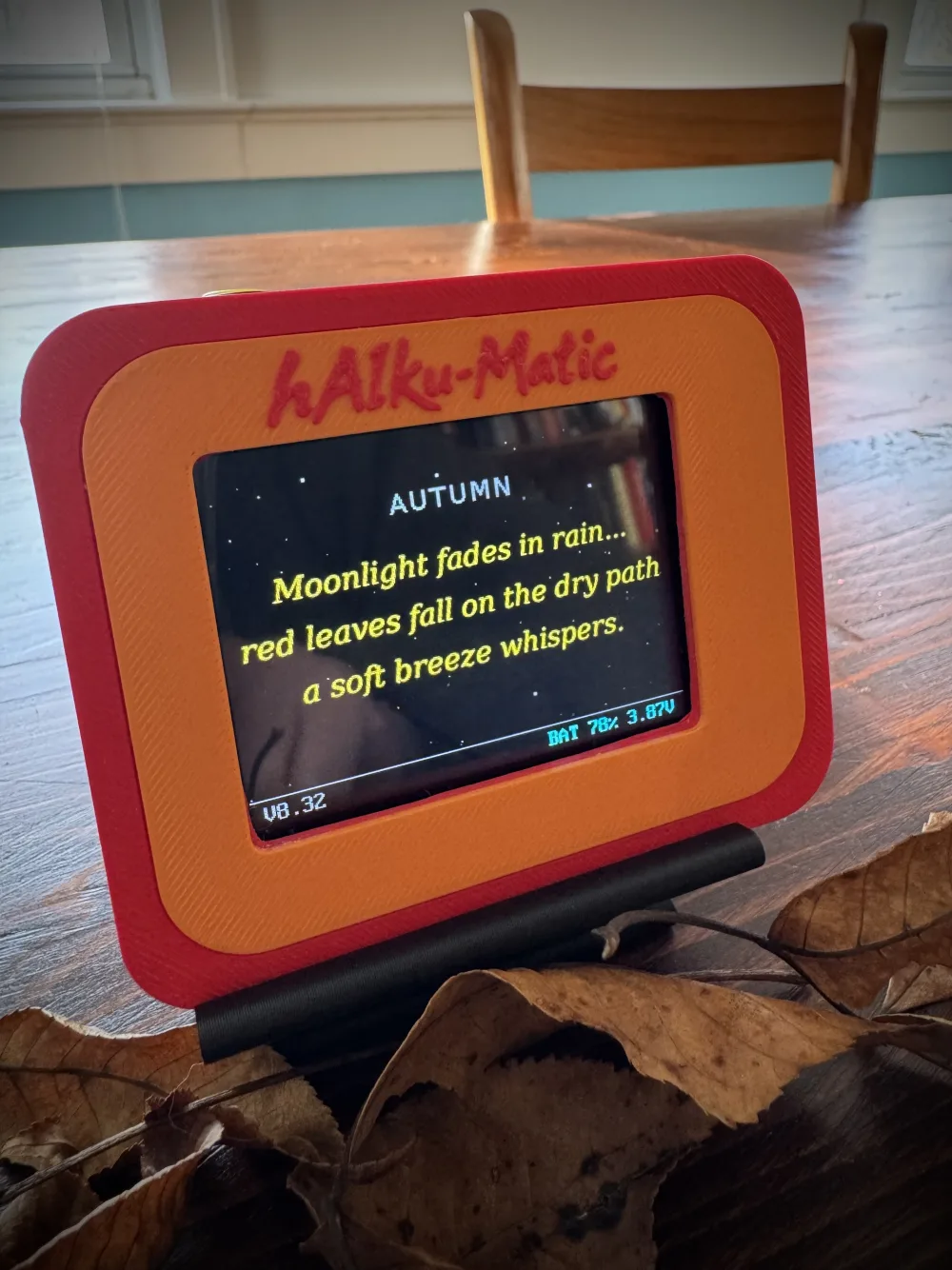
Moonlight fades in rain…
red leaves fall on the dry path
a soft breeze whispers.
On its own chip
The 14.9 MB model lives in the board’s flash. The firmware has no Wi-Fi or Bluetooth code, so nothing leaves the board, and it can write over a billion different haiku.
Touch
Tap the upper half for the next poem and the lower half for the next theme. Rest two fingers anywhere to open the menu.
Themes and styles
Spring, Summer, Autumn, Winter and Space, each in Standard, One-thing or Two-part. The RGB LED glows in the theme’s color and breathes while a poem is being written.
Written ahead
A poem takes about 15 seconds. While one is on screen, the next ones are written ahead, up to 20, and auto mode shows a new one every 40 seconds.
Music
A track loops from the microSD card: a shakuhachi recording, two Japanese records from 1931, or taiko and koto. The menu lists whatever MP3s are on the card.
Hardware
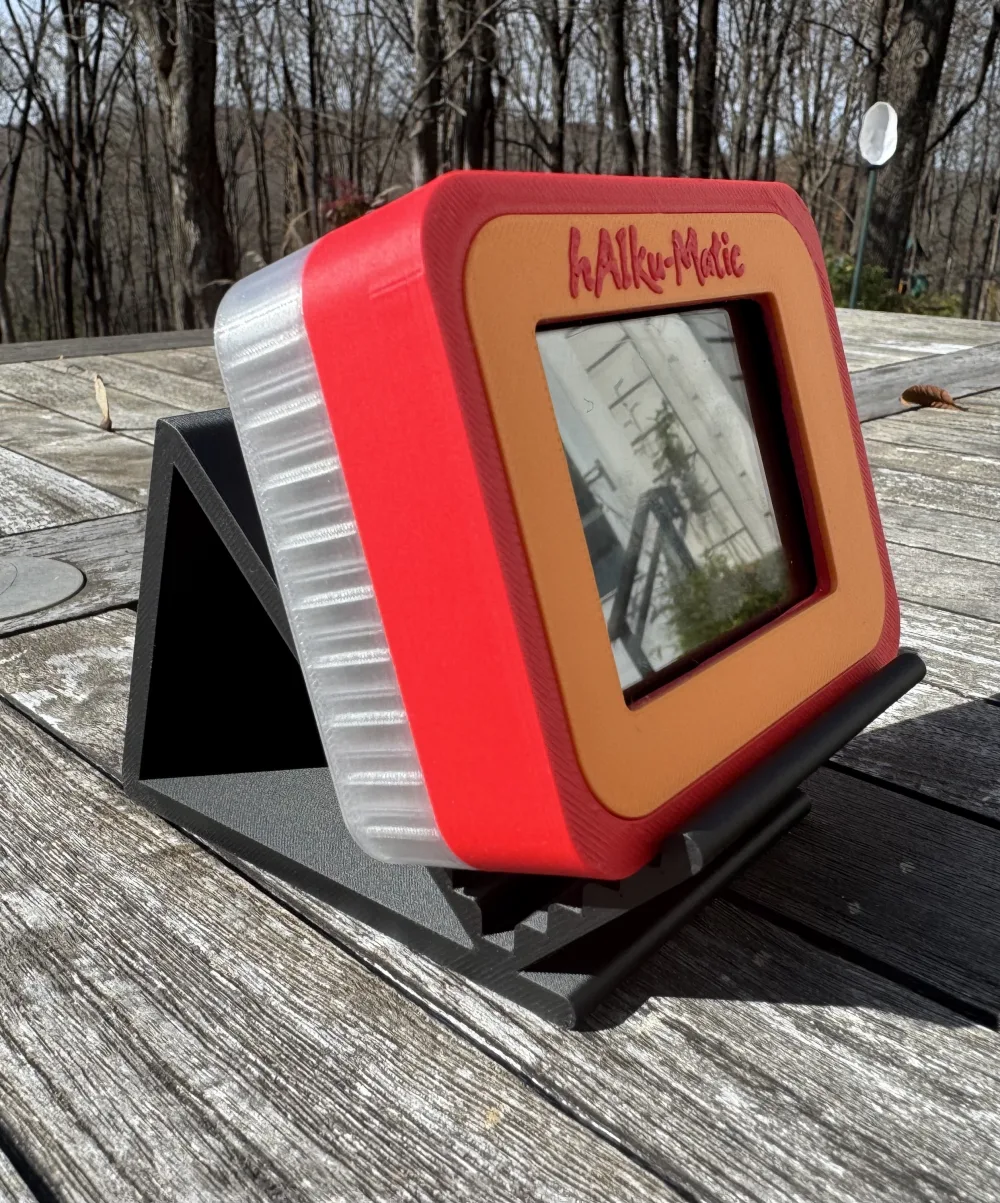
An ESP32-S3 board (LCDWIKI ES3C28P) with 16 MB flash, 8 MB PSRAM, a 2.8-inch 320 x 240 touchscreen, a speaker, a microSD slot and an RGB LED, in a 3D-printed case and stand.
In its case
Latest firmware
V8.32 adds three poem styles on page 3 of the menu, shows the saved style on the splash screen, and adds a fourth menu page that chooses the music from the tracks on the card.
The menu also sets volume, brightness, auto mode, the star field, the light show and one of twelve poem colors. Settings are saved when you press Done and kept across restarts.
Manual
Start-up, the touch map, the menu pages, setting up music on the card, the battery, installing firmware and troubleshooting.